


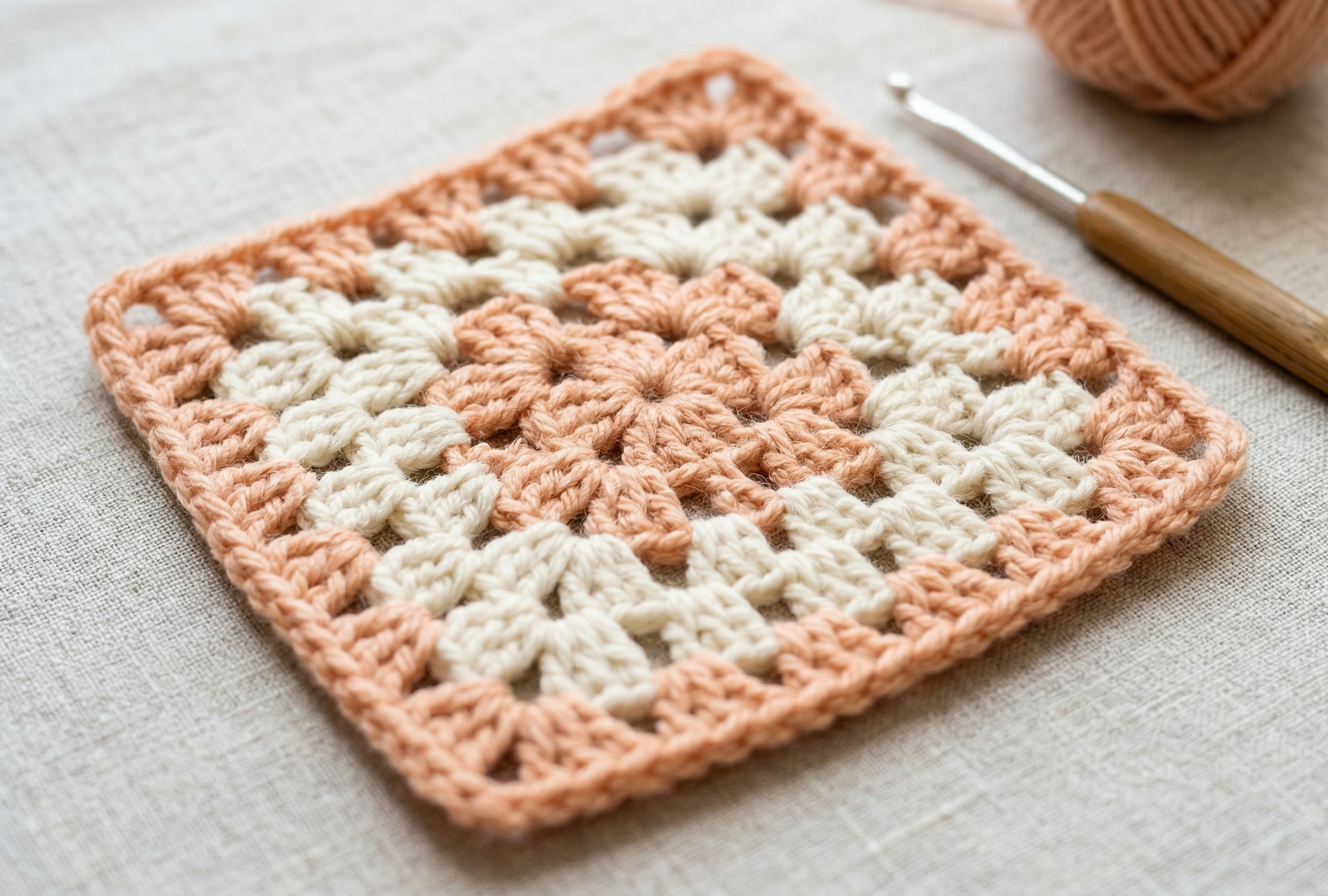
Crocheted granny squares are the whimsical gems of the crafting world. They are beloved by beginners and seasoned crocheters alike….
These versatile squares can be transformed into countless projects, from cozy blankets to stylish bags. In this blog post, we’ll dive into the rich history of granny squares, explore various styles and yarns, and inspire your creativity with stunning color combinations and stitch breakdowns. Grab your crochet hook and let’s get started!
The History of Granny Squares

Granny squares have been loved for generations, and it’s easy to see why. Dating back to the 19th century, these charming crochet motifs became especially popular during the Victorian era, when handmade crafts were a treasured part of everyday life. Often created from leftover yarn, granny squares were a simple and creative way to turn small scraps into something beautiful. Today, they remain one of the most recognisable and versatile crochet designs, bringing together nostalgia, creativity, and timeless handmade style.
Exploring Different Styles of Granny Squares

One of the reasons granny squares have remained so popular over the years is their incredible versatility. While the traditional granny square is instantly recognisable, there are so many beautiful variations to explore, each with its own look, texture, and charm. Whether you love a classic vintage feel or prefer something more modern and structured, there’s a granny square style to suit every project.
Classic Granny Squares
The classic granny square is the design most people picture when they think of crochet granny squares. Made with a simple combination of double crochet stitches and chain spaces, this timeless motif has a soft, open texture and a nostalgic handmade feel. It’s a wonderful choice for blankets, cushion covers, and other traditional crochet projects.
Join-as-You-Go Granny Squares
Join-as-you-go granny squares are a clever and practical option for larger projects. Instead of making all your squares first and sewing them together later, you join each square as you work. This not only saves time at the end, but also lets you watch your blanket, scarf, or garment come together piece by piece, which can be incredibly satisfying.
Solid Granny Squares
Solid granny squares offer a neater, more structured look compared to the classic open design. Because they use a more continuous stitch pattern, they create a denser fabric with less space between stitches. This makes them ideal for projects like bags, pillows, and anything else that benefits from a firmer, more polished finish.
Textured Granny Squares
If you want to add more depth and visual interest to your crochet, textured granny squares are a lovely option. Stitches such as puff stitches, bobbles, and shell stitches can completely transform the look of a square, giving it extra softness, detail, and character. These squares are perfect when you want your finished project to feel a little more unique and decorative.
Circular Granny Squares
For a playful twist on the traditional design, circular granny squares are a beautiful choice. These motifs begin with a round centre and are then worked outward into a square shape, creating a softer, more decorative look. They add variety and movement to blankets and other crochet projects, making them especially appealing if you want something a little different from the classic style.
What Makes a Good Granny Square Yarn?

Choosing the right yarn can have a big impact on how your granny squares look, feel, and hold up over time. Not all yarns behave the same way, and for granny square projects, it helps to find one that offers the right balance of softness, structure, and durability. A good granny square yarn should create neat stitches, feel lovely to work with, and be practical enough for the type of project you’re making.
Stitch Definition
Granny squares are made up of repeating clusters and clean stitch patterns, so good stitch definition can make all the difference. Yarns that are smooth and have a firmer twist tend to show off each stitch beautifully, helping your squares look crisp and well-defined. If a yarn is too fuzzy or loose, the details of the pattern can get lost, especially in more intricate designs.
Durability
Many granny square projects are designed to be used and loved for years, whether they’re blankets, bags, cushions, or clothing. Because of this, durability is an important factor when choosing yarn. A yarn that resists pilling, stretching, and losing its shape will help your finished project stay looking beautiful over time, especially if it is going to be handled often or passed down as a keepsake.
Comfort and Texture
Texture is just as important as appearance, particularly for projects like blankets or wearables. If your granny square project is meant to be cosy and comforting, it’s worth choosing a yarn that feels soft against the skin. A beautiful yarn is always a bonus, but comfort is what truly makes a handmade piece enjoyable to use every day.
Washability
Practicality matters too, especially for projects that are likely to be washed regularly. Baby blankets, throws, and everyday home décor pieces all benefit from yarns that are easy to care for. Machine-washable yarns can be a great choice, offering both convenience and durability for projects that are made to be used often and loved well.
In the end, a good granny square yarn is one that suits both the project and the person making it. When you find a yarn that combines beautiful stitch definition, lasting quality, softness, and easy care, you’ll be setting yourself up for a project that looks wonderful and stands the test of time.
Best Fibre Types for Granny Square Projects

When choosing the best yarn for granny squares, the type of fibre you use can make a big difference to the look, feel, and function of your finished project. Each fibre has its own unique qualities, and the right choice will depend on what you’re making and the kind of texture you want to achieve. From crisp and structured to soft and cosy, there’s a yarn type to suit every granny square project.
Acrylic: Affordable and Versatile
Acrylic is one of the most popular yarn choices for granny square projects, and it’s easy to see why. It’s budget-friendly, widely available, and comes in an incredible range of colours, making it perfect for creative combinations and colourful designs. Acrylic is also easy to care for, lightweight, and beginner-friendly, which makes it a practical and approachable choice for many crochet projects.
Best for: blankets, baby projects, and colourful afghans
A possible downside: lower-quality acrylic yarns can sometimes feel less soft and may pill with frequent use
Cotton: Crisp, Cool, and Defined
Cotton is a lovely choice if you want granny squares with clear stitch definition and a neat, polished finish. It holds its shape beautifully, has very little stretch, and creates a clean texture that works especially well for decorative or structured projects. Cotton is also a wonderful option for warmer weather makes, thanks to its light and breathable feel.
Best for: summer tops, tote bags, coasters, and home décor
A possible downside: cotton can feel a little firmer than other fibres, so it may not be the softest option for cosy blankets
Wool: Warm and Flexible
If you’re looking for softness, warmth, and a cosy feel, wool can be a beautiful option for granny square projects. It has a natural elasticity that makes it comfortable to work with and helps give your stitches a little bounce. Wool is especially lovely for cooler-weather makes, adding warmth and texture to blankets, scarves, and garments.
Best for: cold-weather blankets, sweaters, and scarves
A possible downside: some wool yarns can feel itchy for sensitive skin, and certain types may need gentler care when washing
Blends: The Best of Both Worlds
Blended yarns can offer a wonderful balance of comfort, durability, and practicality. A cotton-acrylic blend, for example, may combine the structure of cotton with the softness and easy care of acrylic. Wool blends can also give you warmth with a little extra durability or softness. These yarns are often a great choice when you want a project that feels beautiful but is also made to last.
Best for: projects that need both softness and durability
A possible downside: some blended yarns can be a little more expensive, depending on the fibres used
In the end, the best fibre for granny squares comes down to the kind of project you want to create and how you want it to feel. Whether you love the crisp finish of cotton, the versatility of acrylic, the warmth of wool, or the balance of a blend, choosing the right fibre can make your granny square project even more enjoyable from start to finish.
Classic Granny Square Pattern

If you’ve been wanting to learn how to crochet a classic granny square, this step-by-step pattern will guide you through the process in a simple and approachable way.
What You’ll Need
Before you get started, gather your supplies:
- Worsted-weight yarn in your chosen colours
- Crochet hook to suit your yarn size
- Scissors
- Tapestry needle for weaving in ends
If you’re unsure which hook to use, check the yarn label for the recommended size. A 5.0 mm hook is a great starting point for many worsted-weight yarns. Smooth yarn in a lighter shade can also make it easier to see your stitches if you’re still learning.
Stitches and Terms Used
This pattern uses a few basic crochet stitches and techniques:
- Magic ring
- Chain stitch (ch)
- Double crochet (dc)
- Slip stitch (sl st)
You’ll also see these helpful terms:
- Granny cluster: a group of 3 double crochets worked into the same space
- Chain space (ch-sp): the space created by chain stitches where the next stitches are worked

No Comment Found.